Our virtual tutoring methodology
HOW CIGNITION APPROACHES INSTRUCTION
Students build understanding when they explain, connect, and apply.
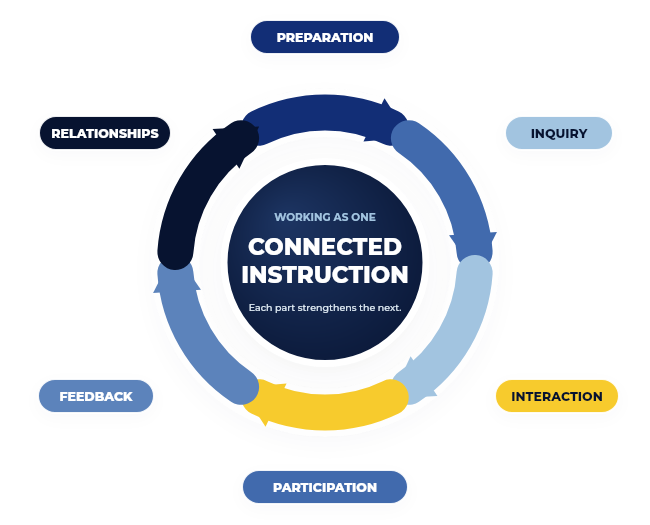
Cignition’s methodology keeps students actively involved in the learning. Tutors use questions, visual models, discussion, purposeful practice, and targeted scaffolds to help students connect what they know with what they are ready to learn next, supporting the larger goal of closing learning gaps over time.
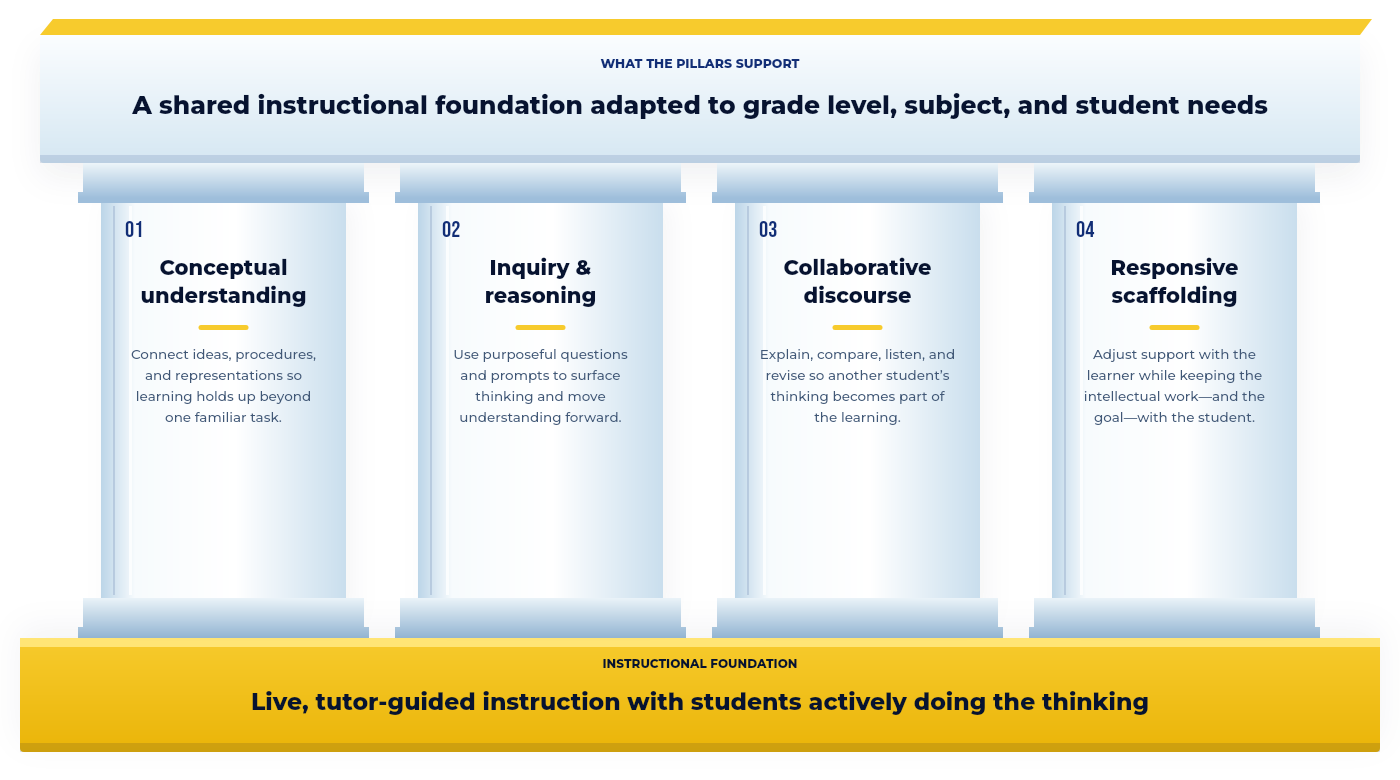
CONCEPTUAL UNDERSTANDING
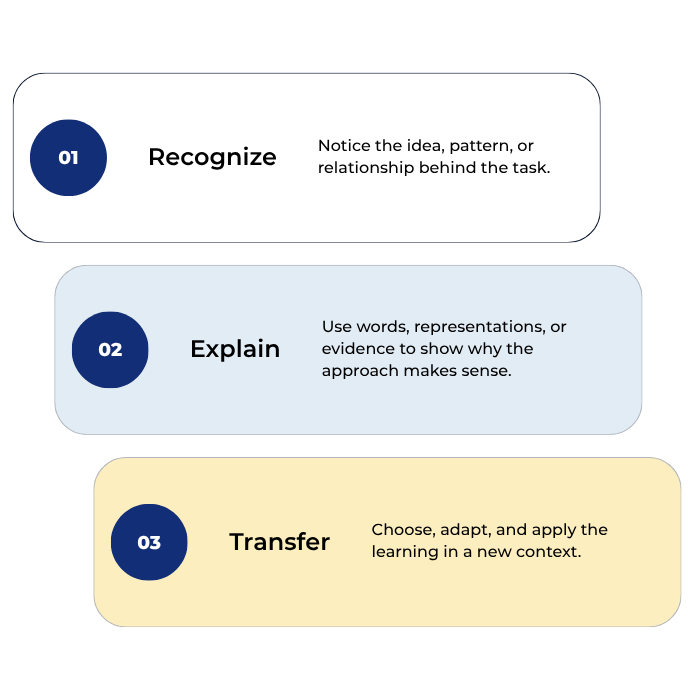
The goal is more than a correct answer. It is understanding that students can use again.
Conceptual understanding is the network of relationships among ideas, patterns, representations, and procedures. It helps students recognize why a strategy works, when it applies, and how to adapt it when a problem or text looks different.
This does not replace explicit instruction, procedural fluency, or practice. It gives each of them a stronger purpose and makes new learning easier to connect to what came before.
PEDAGOGY IN PRACTICE
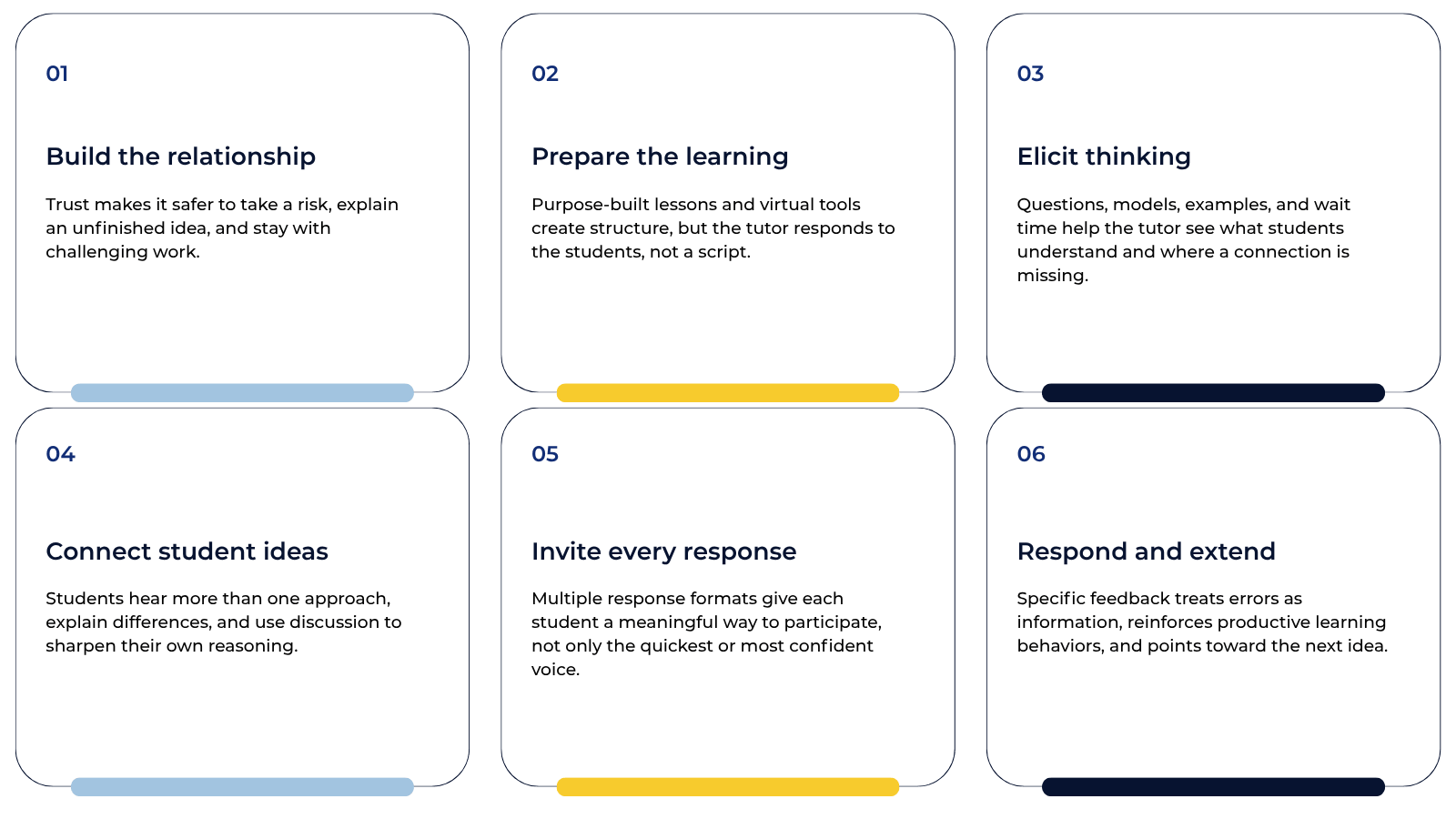
A live session is a sequence of instructional decisions.
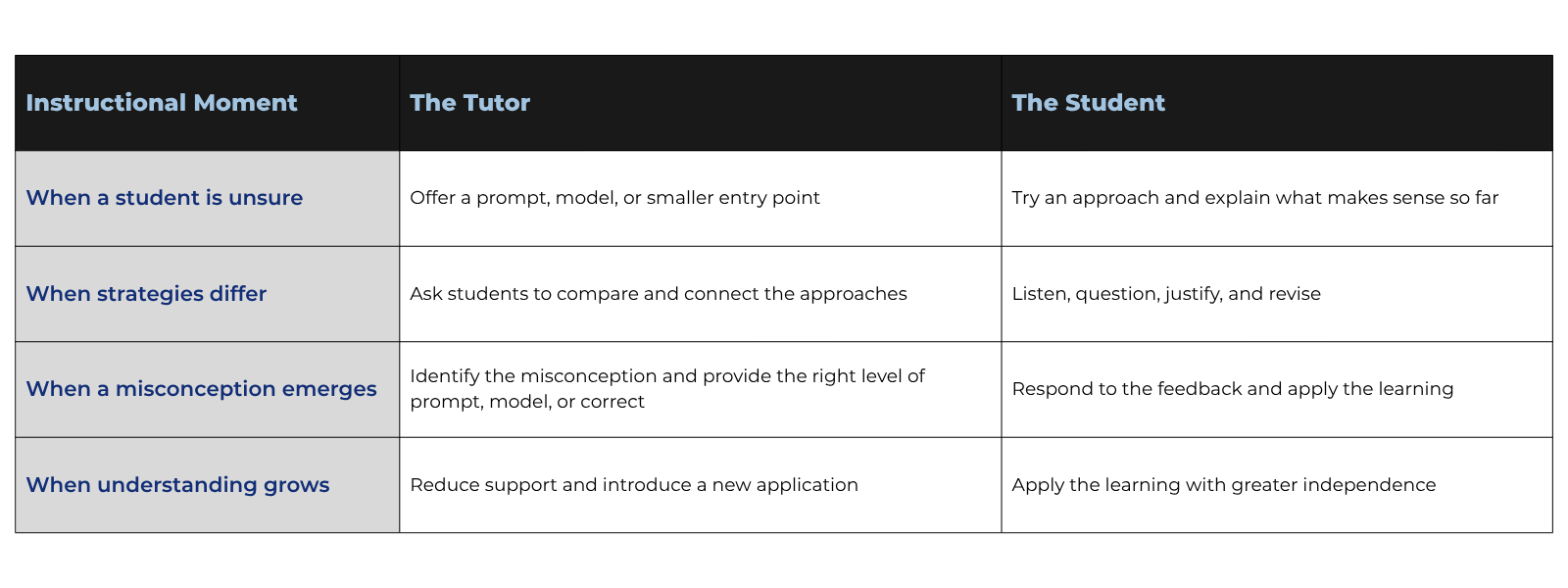
Although the practices are shown in sequence below, live instruction is not a fixed script. Tutors move among them as students respond, building trust, making thinking visible, connecting ideas, and deciding which support will help the group move forward.
Download our pedagogy overview ->
TUTOR-GUIDED. STUDENT-THINKING-FORWARD.
Support should increase student agency, not replace it.
“Student-led” does not mean the tutor steps away. It means the tutor makes deliberate moves that keep students responsible for explaining, connecting, and applying the learning.
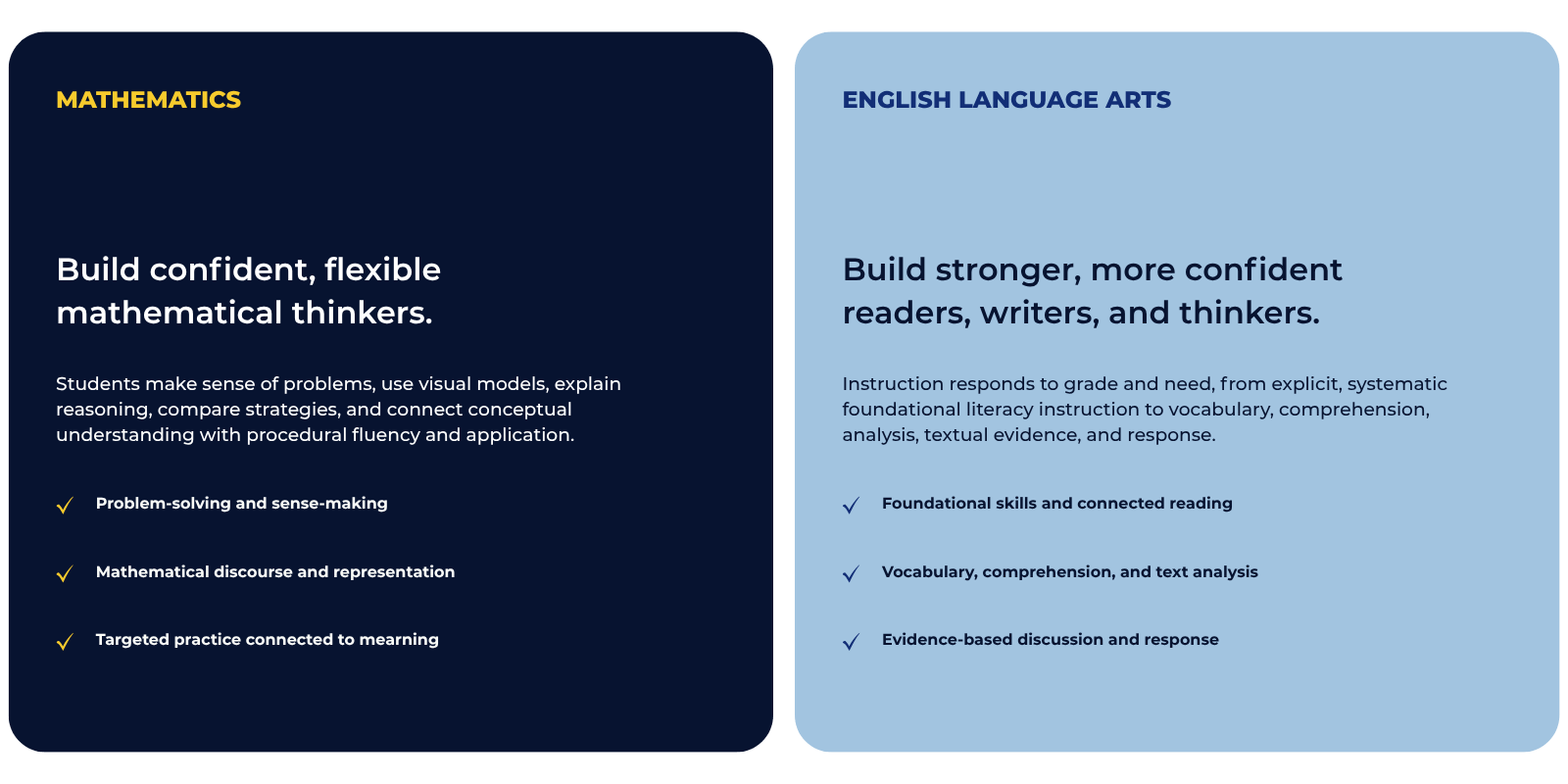
ONE METHODOLOGY, SUBJECT-SPECIFIC PRACTICE
The principles stay consistent.
The instructional work changes.
Students should not have to wait until every prior gap is resolved before they encounter meaningful grade-level learning. They also should not be pushed ahead without the prerequisite support needed to make new learning accessible.
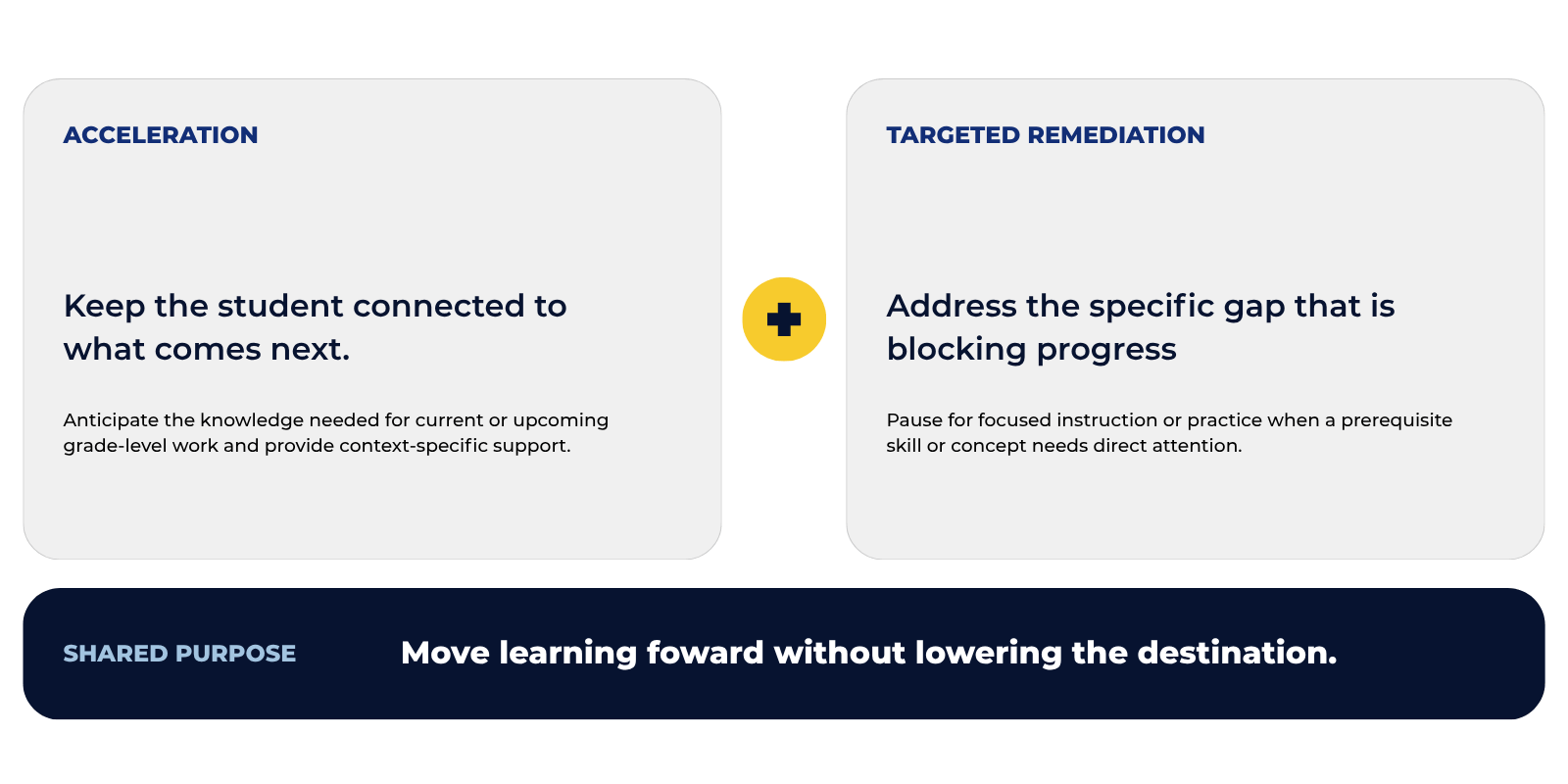
Available academic information, embedded mastery checks, student responses, tutor observation, and partner input can help determine when to accelerate, when to remediate, and when to adjust the scaffold.
METHODOLOGY QUESTIONS
Clarifying what the approach does and does not mean.
Short answers to the distinctions most likely to be misunderstood by educators, leaders, and families.
Does inquiry-based tutoring mean the tutor does not explain or teach directly?
No. Inquiry keeps students actively involved in making sense of the learning; it does not require tutors to withhold explanations. Tutors can model, explain, prompt, and scaffold when those moves help a student make the next connection.
Does Cignition's methodology include explicit instruction and practice?
Yes. Explicit instruction, modeling, procedural practice, reading practice, and feedback can all be appropriate. The methodology connects those activities to meaning and asks students to explain, apply, or use what they are learning, rather than treating practice as the end goal in itself.
Is the methodology the same in math and English language arts?
The instructional principles are shared, but the content and teaching moves are subject-specific. Math may emphasize representations, strategies, fluency, and problem-solving; ELA may emphasize foundational literacy, vocabulary, comprehension, analysis, evidence, and response, depending on grade and need.
How does a tutor decide when to accelerate or remediate?
The decision depends on the learning goal and the barrier the student faces. If a specific prerequisite is blocking access, the tutor can address it directly. If the student can engage in the current or upcoming work with support, the tutor can preview and scaffold that grade-level learning.
Trace how a school's need becomes a configured, supported implementation with a clear review cycle.
See how candidates demonstrate readiness and how Cignition handles background, eligibility, and matching.
START WITH THE LEARNING NEED
Tell us where students are getting stuck and where they need to go.
We'll talk through the learners, goals, available information, and instructional focus that may help close the gap.